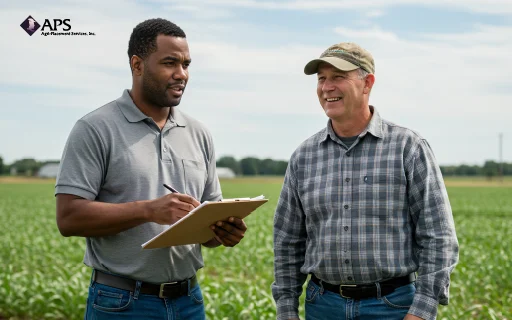

For farm owners and facility managers, the most significant risk to stability isn’t just a change in weather or a shift in market prices, it is the sudden discovery of a labor gap during peak season. When an organization gets used to reacting instead of anticipating, it opens the door to operational chaos, legal exposure, and a dangerous overload on its existing staff.
This is why workforce forecasting has evolved from a back-office administrative task into a strategic pillar of operational excellence. Industry experts, including those from Zendesk, emphasize that accurate forecasting is the foundation of operational agility; without it, organizations face a “lose-lose” scenario of being either overstaffed—wasting capital—or understaffed—leading to service failures and employee burnout.
At Agri-Placement Services, Inc. (APS), we have spent over 25 years acting as the “Legal Shield” and strategic partner for operations in more than 20 states. We know that anticipating staffing needs is the only way to ensure that every worker on your site is properly screened, legally compliant, and strategically placed to prevent burnout and capital risks.
What is Workforce Forecasting? The Power of Anticipation
To understand the value of this process, we must first define it. Workforce forecasting is the strategic process of analyzing current staff capabilities and predicting future workforce demand based on production cycles, historical data, and organizational goals.
In simple terms, it is the practice of ensuring you have the right number of people, with the right skills, at the exact moment they are needed.
In the industrial and agricultural sectors, this isn’t just about counting heads; it’s about timing. Anticipation allows a farm or plant to identify the exact moment when additional labor will be required, bridging the “talent gap” before it impacts production. By shifting from a reactive mindset (“We need people today”) to an anticipatory one (“We will need 50 people in six weeks”), management regains control over its most expensive and vital asset: its people.
Labour Forecasting Techniques for Modern Agribusiness
Planning your workforce shouldn’t be guesswork. For U.S. farms and industrial operations, labor forecasting is simply about using data and experience to prepare for your crew needs before the season hits. The companies that stay ahead are the ones that plan ahead with a roadmap for the fiscal year.
1. Trend Analysis – Learn from your own past:
Look back at your operation:
- How many workers did you need last peak season?
- What was the production volume?
- What months were more critical?
By spotting patterns over the last three to five years, you can create a baseline for future needs instead of scrambling at the last minute.
2. Ratio Analysis:
This technique links staffing needs to a specific business factor.
For example, if your facility requires one supervisor for every 15 field workers, or one mechanic for every 10 tractors, you can forecast your specialized talent needs as your operation scales.
- How many workers and supervisors per acre?
- How many mechanics per equipment fleet?
3. Scenario Planning – Be ready before the storm:
As agriculture is unpredictable, your staffing can’t be rigid.
- What happens if you expand your acreage?
- What if a federal audit requires a sudden change in documentation standards?
Scenario planning helps you prepare for “best-case” and “worst-case” labor demands, ensuring you are never caught off guard by rapid growth or sudden market shifts.
Maximizing Efficiency with Workforce Forecasting Tools
Nowadays, managing your workforce with memory or a notebook isn’t enough. Modern workforce forecasting tools have revolutionized human capital planning. These tools allow managers to centralize data, viewing current crew sizes, expiration dates of work authorizations, and productivity rates in one place.
These tools are helpful for:
- Crew size
- Productivity levels
- Expiration dates for work authorizations
- Training and compliance records
What is even better is that these tools help predict shortages before they become problematic through automation of projections. How does it work? By using software to predict labor shortages based on upcoming harvest schedules or production orders, managers can see “gaps” weeks before they happen.
When combined with APS services, you aren’t just told how many workers you’ll need; you receive a complete solution to ensure every worker is documented, compliant, and ready to work safely and legally. That means productivity without risk.

Avoiding the “Burnout Trap”: Preventing Workforce Overload
One of the biggest risks of poor workforce management forecasting is overloading the team you already have. When an organization fails to anticipate its needs, the burden falls on the “skeleton crew” that is pushed to do the work of many. That is when fatigue, mistakes, and turnover begin to appear, and productivity drops fast.
The Hidden Costs of Overworking Your Team
- Increased Accident Rates: According to OSHA and Ohio State University Extension, exhausted workers are significantly more likely to skip safety protocols or make mechanical errors.
- Runaway Turnover: The “revolving door” of labor is often fueled by burnout. When your best employees are pushed too hard, they eventually leave for a more stable environment.
- Decreased Quality: Fatigue leads to mistakes in sorting, packing, and machinery maintenance, which directly impacts the market price of your product and your brand reputation.
Through accurate workforce demand forecasting, APS ensures that you have the right number of people in place. That means your permanent crew stays protected from burnout and keeps your operation running at peak efficiency without compromising human safety or morale.
The Legal Perspective: Forecasting as a Compliance Shield
In the United States, hiring is a legal minefield. When you hire in a rush to fill an unexpected gap, mistakes happen. These mistakes—such as improper I-9 documentation, failing to verify work eligibility, or misclassifying employees—can lead to devastating federal fines, legal exposure, or even consequences for your operation.
How Forecasting Protects Your “Legal Shield”:
- Time for Proper Screening: When you anticipate your staffing needs two months in advance, APS has the time to conduct thorough background checks and documentation audits.
- Compliance with Federal Laws: Regulated programs like H-2A require strict, non-negotiable timelines. Forecasting allows you to meet these deadlines without the stress of “emergency” hiring.
- Audit Readiness: A well-forecasted workforce is a well-documented workforce. By avoiding the chaos of last-minute hiring, you ensure that every file is in order before an auditor ever knocks on your door.
APS specializes in this “Legal Shield” approach. By managing the Employee Leasing or Direct Hire process with a focus on future needs, we ensure that your organization remains a “safe harbor” for legal compliance.
The ROI of Anticipation: Productivity and Peace of Mind
The financial return on investment for workforce forecasting is undeniable. It isn’t just an HR expense; it is a profit-protection strategy. Organizations that master these labour forecasting techniques see a direct impact on their bottom line:
- Elimination of “Emergency” Hiring Costs: Last-minute recruiting is expensive, inefficient, and often leads to lower-quality hires.
- Reduction in Workers’ Comp Claims: By preventing labor overload and burnout, you keep your safety record clean and your insurance premiums low.
- Operational Continuity: While your competitors are struggling to find people mid-season, your operation is moving at full speed because your needs were met weeks ago.
Conclusion: Partnering with APS for a Predictable Future
Workforce forecasting is the difference between a business that survives and a business that thrives. It requires the right labour forecasting techniques, the best workforce forecasting tools, and, most importantly, a strategic ally that understands the unique pressures of the industrial and agricultural sectors.
At Agri-Placement Services, Inc. (APS), our promise is to help you see the future of your workforce clearly. Since 1999, we have helped organizations move from a state of constant labor anxiety to a state of predictable, compliant growth. By anticipating your staffing needs today, we build the “Legal Shield” that protects your operation tomorrow.
Don’t wait for the gap to appear. Let APS help you forecast, recruit, and manage the team that will take your organization to the next level within a workforce you can rely on.