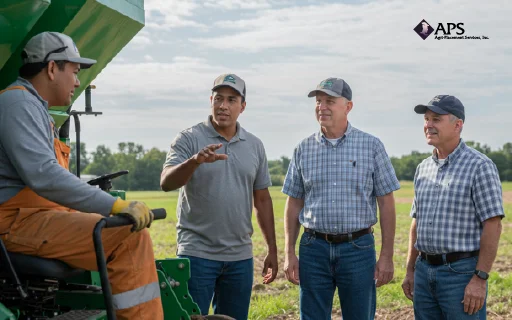

A Strategic and Effective Human Resource Management
For operational leaders in fields like agriculture, lumber, logistics, and others, every business function is measured by its impact on efficiency, risk, and the bottom line. For too long, Human Resources (HR) has been mistakenly viewed as a mere cost center- a bureaucratic necessity for hiring and compliance paperwork. This perception is a management failure.
In today’s volatile labor market, HR is the engine of operational stability and your most critical defense against financial risks such as high turnover, compliance penalties, and internal conflict. In this sense, effective human resource management becomes a strategic pillar for operational resilience. The modern mandate for profitable operations is clear: strategic HR is essential for building strong teams, and at Agriplacement our mission is to provide our clients with a workforce they can truly rely on.
HR as Your Primary Risk Mitigation Tool
For businesses managing large, diverse, and often seasonal workforces, risk mitigation goes far beyond just protecting equipment. The biggest legal and financial liabilities often stem from complex labor regulations and workforce misclassification.
- The Problem: The most significant liabilities are not physical but legal and operational, stemming from:
- Complex labor regulations.
- Workforce misclassification.
- Cultural misalignment and poor communication.
- The Strategic Solution (The Data): According to McKinsey & Company (2024), organizations that integrate HR analytics and compliance frameworks into their core operations reduce legal risk exposure by up to 30% compared to those that treat HR as a purely administrative function.
- Resilience: When HR operates strategically, it:
- Prevents Costly Violations: Through proactive compliance monitoring.
- Builds Employee Trust: Via multilingual training and structured feedback channels, like APS does with bilingual trainings.
- Increases Stability: Leading to fewer disputes, lower turnover, and a stronger safety culture.
In short, modern HR isn’t just about hiring; it’s about protecting your company’s financial and reputational stability.
Why Unmanaged Risk is Unacceptable
Allowing your company to have a field which covers complex labor risks and recruitment, lowers the risk of internal sabotage. For example, it decreases financial penalties such as fines related to OSHA violations, wage disputes, or improper management of H-2A/TN visa documentation.
According to research from the Society for Human Resource Management (SHRM), proactive HR practices focused on legal compliance, documented policies, and cultural alignment are a direct measure of a company’s success. Maintaining a clear human resources responsibilities list also supports accountability across recruitment, compliance, and employee development, preventing costly administrative errors and legal exposure.
The Department of Labor (DOL) stresses that clear communication and documented training are essential for ensuring fair and safe working conditions. Strategic HR activities ensure every worker, regardless of background, understands their role, their rights, and safety procedures.
At Agriplacement, we believe that having an ally who manages the entire HR spectrum—from recruitment and documentation to cultural integration, training, and safety—gives your company the best shove for sustainable and continuous growth.
Retention Starts Before the Hire
In industries with high turnover and large teams, every hiring mistake is a costly operational setback. Therefore, the best HR practice is to focus on structured recruiting and onboarding to ensure that the right talent is sourced and integrated quickly in the field of expertise.
There are two strategic iitems to take into account when hiring that we at Agriplacement always care about:
- Data-Driven Hiring: We use analytics to understand which recruitment sources consistently produce reliable, long-term employees. By analyzing retention patterns and performance data, we can identify the most effective hiring channels and reduce the risk of bringing in candidates who are likely to leave within the first months, ensuring our clients get the best workforce.
- Structured Onboarding: The McKinsey Global Institute emphasizes that effective integration is key, and we believe this to be true. HR must ensure new hires are not just handed a manual but are connected, trained for competence, and immediately engaged with the company’s operational values. That’s why our training programs and HR team are demanding and meticulous. We also believe this accelerates Time-to-Productivity and drastically cuts the average cost of replacement.
In the end, strategic talent acquisition isn’t just about filling positions; it’s about building stability from day one. At Agriplacement, we apply the best practices in HR management by combining data-driven hiring with structured onboarding, so we help our clients to reduce turnover, improve productivity, and secure a workforce that they can rely on.
Best Practices in HR Management
A good HR practice for large teams is definitely training them in their functions, which must be tied directly to measurable business outcomes (Performance KPIs). For this reason, HR is responsible for developing targeted programs that prioritize skills indispensable for safety, quality, and output, which at the end will protect your business and your workers.
- Targeted Development: SHRM research confirms that investing in continuous learning and career pathways is a top factor in retaining key employees. For example, in a heavy operational environment, training focuses on machine maintenance, precise quality control, and advanced safety protocols, which focuses on safety and high production.
- Performance Management: HR uses objective metrics that incentivize performance, rather than tenure. This reinforces the idea that competence is the only way forward and links employee success with business profitability.
HR as a Strategic Partner for Measuring Human Capital Value
Effective business leaders understand that growth requires constant adaptation. HR analytics provide the data necessary to make these strategic course corrections. The use of people analytics for large teams can transform guesswork into informed action.
By implementing people analytics, HR can provide answers to crucial questions that directly impact financial performance, like for example:
- Which managerial practices help to increase employee retention rates?
- Where are the biggest labor bottlenecks that can be solved with targeted recruiting or upskilling?
- How do changes in compensation or schedule directly affect productivity per hour?
The answers to these questions help to draw the path your company needs to implement. According to the AIHR (Academy to Innovate HR), these data points also empower leaders to quantify the Human Capital Value by demonstrating how HR initiatives—from engagement surveys to performance reviews and feedback—increase efficiency and reduce costs. By measuring these outcomes, HR moves from processing payroll to reporting on financial impact.
Additionally, APS integrates best practices for HR payroll time tracking integration, reducing manual workloads and ensuring accurate data for performance analysis. Also, adopting best practices for project tracking in HR departments allows leaders to track training and progress in the workforce in real time.
Strategic Partnering for Operational Excellence
McKinsey points out that the next generation of successful companies will be defined by how well they integrate their “people” into their overall business strategy and culture. What this can mean for operational companies is the necessity of finding an HR partner that truly understands the physical demands, regulatory environment, and financial pressures of your specific industry.
Growing as a company isn’t just about financial data; it is about building a workforce you can truly rely on, so you can concentrate on the next growing step. Therefore, the decision to partner with strategic HR experts is an investment in operational resilience, regulatory compliance, and sustained profitability.
Your Workforce, Your Competitive Edge
Businesses can turn HR from an administrative expense into a quantifiable growth engine that promotes productivity and compliance by implementing HR best practices for large teams.
On the other hand, strategic Human Resources is not a compliance burden; it is the infrastructure that allows you to manage risk and maximize the performance of your most valuable, and most expensive, asset: your workforce. When HR practices are aligned with operational goals, compliance, retention, and performance management, you ensure that every dollar spent on labor is a productive investment.
AgriPlacement (APS) is built to be that strategic partner. We bridge the gap between complex HR regulation and the demanding operational floor, providing the solutions necessary to build, manage, and sustain a workforce you can rely on.
Learn more about how APS can help your operation thrive through smarter, safer, and more strategic workforce management.