
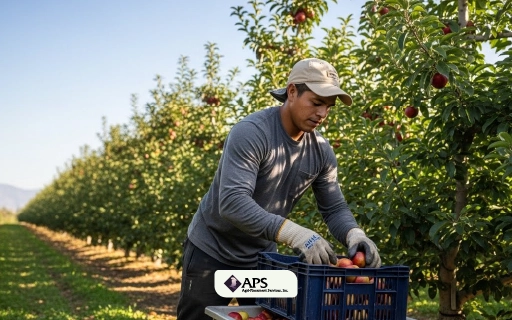
In the American agribusiness, a fundamental truth remains: no harvest equals no revenue. The need for a stable and compliant workforce, especially for intensive seasonal jobs like fruit picking, remains one of the biggest vulnerabilities for farms in states such as California, Washington, and Florida. Market prices may rise and fall, but the demand for reliable workers who can perform during the short harvest window stays constant and absolutely essential.
This guide provides operational leaders and potential workers with a realistic view of the seasonal work farm industry. We differentiate the pay rates, compliance requirements, and labor sourcing strategy behind securing workers for fruit picking jobs and similar essential roles. Understanding the mechanics of hiring foreign workers for fruit picking work, including navigating the H-2A visa sponsorship process, is nowadays the strategy for protecting millions in yields.
Why Fruit Pickers are so important
For operational managers, the biggest threat posed by the farm labor shortage is not the wage rate, but the speed of deployment and compliance stability of the harvest crew. This is because when instability starts to affect the teamwork with high turnover or missed reliable workers, the crops have to face a high cost.
The Cost of Instability:
- Yield Loss: Perishable crops like berries, apples, or grapes, require a stable and strong crew, because a crew shortage can result in millions of dollars in unpicked product, directly impacting contract fulfillment.
- H-2A Burden: The primary mechanism for obtaining seasonal fruit picking jobs in USA is with the visa sponsorship: the H-2A temporary worker program. For the farm owner, this program requires stringent compliance with the Department of Labor (DOL) regarding housing, transportation, and minimum wage requirements (the Adverse Effect Wage Rate, or AEWR). Failing to comply can lead to heavy fines and blacklisting that risks the next season’s entire labor supply.
Choosing the right teamwork for your harvest signifies safety, security, and crop progress.
Skills and Requirements for being a Fruit Picker
The role of the fruit picker is often underestimated. It is a demanding, high-stakes job where efficiency directly impacts the farm’s revenue model. The question, “How to become a farm worker in the USA?” often begins with these basic requirements:
- Physical Endurance: Workers must tolerate long hours and often harsh weather conditions (heat, humidity). This is non-negotiable for the speed required during peak harvest.
- Piece-Rate Efficiency: Much of the compensation for fruit picking work is based on the piece-rate system (paid per unit—e.g., box or flat). Quick, careful, and efficient workers are necessary to maximize both the worker’s earning potential and the farm’s throughput.
- Quality Control: The worker must identify ripe, marketable produce while minimizing damage, which directly affects the final market price and the farm’s reputation with distributors.
Requirements for Seasonal Work-Farm Jobs
For U.S. citizens and those already legally residing in the country, the primary requirement is physical capacity and reliability.
For foreign nationals seeking agriculture jobs in USA with visa sponsorship, the requirements are channeled strictly through the H-2A program. The worker must:
- Demonstrate that they are seeking temporary, seasonal agricultural work.
- Be sponsored by a U.S. agricultural employer who has proven that U.S. workers are unavailable.
- Intend to return to their home country upon the visa’s expiration.
How much do Fruit Picking Workers earn?
The most pressing question for any agricultural operator hiring seasonal labor is: “How much do you get paid for Fruit Picking?” The answer isn’t simple as picking a number because wages are largely set by federal rules, not just the market.
A. The Adverse Effect Wage Rate (AEWR) Floor
For fruit picking jobs in USA with visa sponsorship (H-2A), the U.S. Department of Labor (DOL) requires payment of the Adverse Effect Wage Rate (AEWR). This is the minimum hourly wage an H-2A employer must pay to ensure foreign workers don’t lower the pay of U.S workers.
The challenge is that AEWR rates change every year and are set by state or region, not nationally. That means each farm must always pay whichever is higher:
- The AEWR
- the federal
- or state minimum wage or the local prevailing wage
In consequence, if a farm pays less than the required rate, it risks audits, penalties, and federal violations—all of which can jeopardize the entire operation.
B. The Piece-Rate System
Most high-volume harvesting operations, including strawberry picking jobs, use a piece-rate pay system.
- How it works: Workers are paid per basket, box, or pound they harvest. The faster they work, the more they earn. This system motivates speed and helps farms move more product in less time.
- The Compliance Trap: Even when paying piece-rate, employers must follow the hourly wage rules (including AEWR). The Department of Labor requires farms to track every hour worked meticulously. If a worker’s piece-rate earning ends up being less than what they would have earned at the AEWR for those hours, the farm must pay the difference.
- Why this matters: This creates an operational mandate: crew managers must ensure workers are fast enough to exceed the AEWR floor through the piece-rate system. If not, the farm ends up covering the gap by removing the financial benefit of using piece-rate in the first place.
How to Become a Farm Worker in the USA
Understanding “How to become a farm worker in the USA?” is essential for managing recruitment, especially in the context of seasonal work farm shortages. Therefore, compliance is the path that dictates the stability of the workforce.
It’s common that U.S. citizens and permanent residents apply to farms seeking fruit picking work. They are a priority but are increasingly difficult to recruit due to labor shortages. That’s the reason why, in Agriplacement, we do the hard work of recruitment for you, so reliable workers come and help your business grow.
For foreign workers (H-2A) the majority of seasonal labor for high-demand harvest work is secured through the H-2A program, making the employer the central point of the process, assuring a great harvest.
Nevertheless, for operational leaders, the key takeaway is that the responsibility for compliance, recruitment, housing, and the financial cost of sponsorship rests entirely on the employer.
That’s the reason why partnering with a specialized HR service like APS is often the most cost-effective risk mitigation strategy against the complexity of the DOL and USCIS (U.S. Citizenship and Immigration Services) regulations.

The Strategic Imperative of Compliance and Stability
The conversation around fruit picking jobs in USA with visa sponsorship must move beyond the simple crisis of finding enough hands. For farm owners and operational leaders, the real issue is risk mitigation and cost control. In that matter, the workforce is the most exposed to DOL regulations and the most likely to leave if conditions aren’t managed well.
Securing the harvest window—and therefore your yearly revenue—depends on understanding two things: the Piece-Rate system and the Adverse Effect Wage Rate (AEWR) rule. So, for the common question of how much do you get paid for fruit packing…
Your entire harvest window—and therefore your yearly revenue—depends on understanding two things: the Piece-Rate system and the AEWR wage rule. For the basic question of “How much do you get paid for fruit picking?” the real challenge is revealed:
If your crew isn’t fast enough to earn above the AEWR hourly rate, you pay the difference, cutting into your profit. This is why having an ally that brings to your business strong recruiting, training, and supervision is no longer optional—it protects millions in crop value.
Furthermore, the legal path under the H-2A program puts all compliance responsibility on the employer. Housing, payroll, transportation, safety rules, etc. One mistake can bring federal audits, large fines or even losing the ability to hire workers in the future, so having always someone by your side for these paperwork is essential. Remember, non-compliance always costs more than proper management.
Modern agriculture demands a shift in strategy. We believe farm operators should focus on the farming, soil, equipment and markets, not on the complex labor requirements behind fruit picking jobs or other high-volume harvest roles. This is why, we offer our clients to rely on us, APS a specialized partner that assures reliable, compliant and efficient workforce for their business.
Do you want to partner with us for recruiting reliable fruit pickers for your farm? Contact us now and let’s get started!