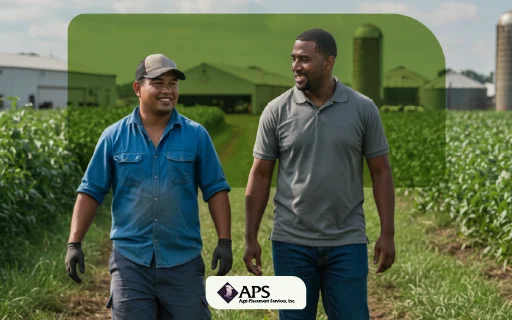
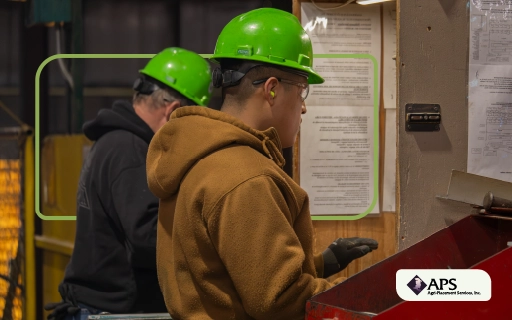
Hiring reliable manual labor is one of the hardest parts of running a labor-intensive operation. In dairy, lumber, and construction, the problem is rarely just “finding people.” The real issue is finding workers who show up, adapt quickly, follow safety rules, and stay productive under pressure.
That challenge becomes more serious when the business is expanding, labor markets are tight, and supervisors are already stretched. APS states that it supports employers in more than 20 U.S. states and works across agricultural and non-agricultural sectors, including dairy, lumber, and construction. APS also notes that many entry-level placements can be filled within two or three weeks, although specialized roles may take longer.
For employers in these sectors, a strong hiring process needs to answer three questions:
- What type of worker is actually needed?
- What contract structure fits the operation?
- How can the business reduce turnover after hiring?
This article breaks down those decisions in a practical way so employers can improve workforce stability, protect output, and make better hiring choices.
Why reliable manual labor matters more in dairy, lumber, and construction
These three sectors depend on manual work, but they do not operate the same way. Dairy runs every day. Lumber often mixes remote worksites, heavy equipment, and seasonal pressure. Construction moves by project phase, timeline, and subcontractor coordination. That difference changes the cost of a bad hire.
In dairy, one unreliable worker can disrupt milking routines, animal care, sanitation, and shift coverage. In lumber, the cost often appears in delays, safety exposure, and reduced output in physically demanding environments. In construction, weak hiring can affect scheduling, crew coordination, site safety, and rework.
This is one reason contract structure matters so much. The labor model that fits a dairy farm may not fit a sawmill or a framing crew.
The first hiring decision: choose the right labor model
Before posting a job or contacting a recruiter, employers should define the employment structure behind the role. That decision shapes compliance, duration, replacement speed, and supervision.
Contract differences by sector
| Sector | Typical labor pattern | Best-fit contract model | Main hiring consideration |
| Dairy | Ongoing, year-round, repeatable work | Direct employment, long-term staffing, or annual service support | Dairy operations usually need labor continuity rather than short seasonal coverage |
| Lumber | Can be seasonal, remote, production-based, or shift-based | Direct hire, recruitment-only support, or temporary non-ag labor solutions depending on the role | Employers often need flexibility because production demand and site conditions vary |
| Construction | Project-based, deadline-driven, phase-dependent | Direct hire, temporary staffing, recruitment-only, or leasing depending on project duration | Speed, safety onboarding, and clear supervision are critical |
This table matters because U.S. labor pathways differ by industry and duration. The Department of Labor states that the H-2A program is for temporary or seasonal agricultural labor, while USDA ERS notes that most livestock producers, including dairies, are not legally allowed to use H-2A to cover year-round labor needs.
For non-agricultural temporary needs, the Department of Labor and USCIS state that H-2B is for temporary non-agricultural labor, and USCIS notes the statutory H-2B cap is 66,000 visas per fiscal year before any supplemental allocations. That makes contract planning especially important in lumber-related non-ag operations and some short-term construction hiring situations.
What this means in practice
Dairy employers usually need stability, routine coverage, and workers who can stay with the operation. That makes long-term direct employment or a broader workforce support model more practical than a short seasonal contract. USDA’s guidance on H-2A seasonality is especially relevant here.
Lumber employers may need a mixed approach. A sawmill with steady output may prefer direct or long-term staffing. A forestry or remote operation facing temporary demand may need a shorter hiring structure, depending on whether the work is agricultural or non-agricultural. APS lists lumber among the industries it supports in multiple states, including Wisconsin, Pennsylvania, New York, Vermont, New Hampshire, and Maine.
Construction employers often hire around project phases, schedule pressure, and site milestones. OSHA states that when temporary workers are supplied by a staffing agency, the staffing agency and the host employer are considered joint employers and both have safety responsibilities. That means the contract model should clearly define onboarding, supervision, and safety training responsibilities from day one.
How to hire reliable manual labor with fewer hiring mistakes
A stronger hiring process usually begins with clear selection criteria, not with a larger number of applicants. Many employers in dairy, lumber, and construction lose valuable time because hiring decisions focus first on availability rather than long-term reliability.
In labor-intensive industries, reliability determines whether a worker will integrate smoothly into daily operations. Shifts must run on time, tasks must follow precise procedures, and supervisors must trust that workers can maintain consistent output under demanding conditions.
For this reason, employers hiring agriculture labor, dairy farm workers, or construction labor crews should prioritize indicators that reveal how candidates behave in real working environments.
What reliable manual labor looks like
Across dairy farms, lumber operations, and construction sites, dependable workers usually share similar characteristics. These signals help employers identify candidates who are more likely to remain productive and stable over time.
- Strong attendance history: Workers who consistently arrive on time and maintain stable attendance patterns reduce operational disruptions. Reliable attendance is particularly important in dairy environments where daily routines such as milking schedules depend on predictable staffing.
- Ability to follow instructions accurately: Manual labor roles often involve repetitive tasks that must be performed in a specific way. Workers who follow instructions carefully help maintain production consistency while also reducing safety risks across teams.
- Physical readiness for the role: Jobs in agriculture, lumber, and construction require endurance and physical stamina. Candidates who understand and accept the physical demands of the job are less likely to leave early due to workload expectations.
- Stable work history: Employment records that show longer job durations often indicate stronger work habits and higher retention potential. Workers who have remained in previous roles typically adapt more easily to structured operational environments.
- Willingness to work in demanding conditions: Many manual labor roles involve outdoor environments, variable weather, or early morning schedules. Workers who demonstrate flexibility and resilience are often better suited for these industries.
This is one area where agriculture labor hiring differs significantly from office-based recruitment. A candidate may appear qualified on paper but still struggle if the employer does not confirm that the individual is comfortable with repetitive routines, physical effort, and structured supervision.
Screening questions that improve hiring quality
Structured screening allows employers to verify whether candidates truly match the operational demands of the role. Instead of relying only on general interview questions, hiring managers should evaluate practical aspects of workplace behavior.
- Attendance reliability: Employers should verify whether candidates have maintained punctuality and regular attendance in previous roles. References or past supervisors can often confirm whether the individual consistently arrived on time and followed shift schedules.
- Comfort with physical job demands: Candidates should clearly understand the physical expectations of the position, including lifting, repetitive movement, outdoor work, or early shifts. Confirming this early reduces the risk of early resignation after hiring.
- Safety awareness and discipline: In industries such as construction and lumber, safety procedures are critical. Candidates should demonstrate that they are comfortable using protective equipment, following operational protocols, and reporting hazards when necessary.
- Task repetition and consistency: Many manual labor roles require performing the same tasks accurately over long periods. Employers should verify whether candidates can maintain focus and follow standardized procedures without frequent correction.
- Long-term employment interest: Workers looking for short stopgap jobs may not remain long enough to justify training investments. Candidates who seek stable employment opportunities are more likely to integrate into the workforce and maintain productivity.
For construction labor hiring, these screening factors are especially important. Weak hiring decisions can create scheduling delays, safety risks, and productivity losses on active job sites. Workplace safety agencies such as OSHA emphasize the importance of proper training and coordination when new or temporary workers enter a construction environment.
Onboarding is where reliability becomes real
Hiring a worker does not immediately guarantee workforce stability. Reliability becomes visible during the first days and weeks after the employee joins the team.
The early onboarding period determines whether a worker understands expectations, integrates with the crew, and develops consistent work habits.
APS explains that its full-service workforce model includes employee placement, training support, paperwork coordination, and ongoing communication between employer and employee. These elements help reinforce performance standards during the critical first stages of employment.
Employers who invest in structured onboarding often see improvements in retention and productivity.
Practical onboarding practices for manual labor roles
- Explain daily routines and operational expectations clearly: Workers perform more confidently when they understand how tasks fit into the overall workflow. Clear instructions during the first days help prevent confusion and reduce early mistakes.
- Provide safety training tailored to the work environment: Dairy, lumber, and construction settings each present different safety risks. Early instruction on protective equipment, hazard awareness, and reporting procedures helps protect both workers and supervisors.
- Demonstrate tasks before expecting independent work: Hands-on demonstration allows new employees to observe how tasks should be performed. This approach helps workers learn faster and reduces the need for repeated corrections later.
- Encourage early feedback and questions: Workers should feel comfortable asking questions during their first weeks. Open communication helps supervisors correct misunderstandings before they affect performance.
- Monitor progress during the first month: The first thirty days often determine whether a worker remains with the company. Regular check-ins help identify issues early and support long-term workforce stability.
For dairy farm workers, onboarding usually focuses on routine repetition and sanitation procedures because daily operations follow strict schedules. In lumber and construction environments, safety communication and clear role definitions often receive more emphasis because work conditions can change frequently.
Which APS contract option fits each sector best
APS offers several service structures that allow employers to adapt hiring strategies according to operational needs. Selecting the appropriate option can help organizations manage workforce risk while maintaining productivity.
Different sectors often require different levels of workforce support.
Recruitment-Only
- Employers maintain internal workforce management: This option works well for companies that already have established HR systems but want assistance finding reliable candidates. APS supports recruitment while the employer manages onboarding and supervision internally.
- Flexible contract terms depending on hiring needs: APS explains that recruitment-only agreements can include contract terms of six weeks, six months, or twelve months. This flexibility allows employers to adapt hiring support to operational demand.
Full Service Workforce Support
- APS assists with recruitment, onboarding, and employee coordination: Employers who need broader workforce assistance may benefit from a full-service structure. APS helps manage placement, communication, training coordination, and ongoing workforce support.
- Annual service structure designed for long-term stability: This model works well for operations that require consistent staffing throughout the year, such as dairy farms or large agricultural businesses.
Employee Leasing
- APS assumes many employment-related responsibilities: In this structure, APS becomes the employer of record for leased workers. This approach allows companies to shift certain administrative and legal responsibilities to APS.
- Employers reduce administrative risk and compliance complexity: Leasing arrangements can help organizations simplify workforce management while maintaining operational flexibility.
Each contract option supports different workforce strategies. Dairy operations typically prioritize stability and long-term workforce continuity, while lumber and construction employers may require more flexible hiring structures depending on seasonal demand or project timelines.
Sector-by-sector recommendation
In the dairy sector, a long-term structure is usually the better fit because labor demand is ongoing. Full-service support or a stable direct-hire strategy generally aligns better with year-round work than short hiring cycles. USDA ERS explains why seasonal H-2A logic often does not match dairy’s recurring labor pattern.
In the lumber industry, the right model depends on the work setting. A permanent mill role may fit direct hiring or long-term support. A fluctuating non-ag role may call for recruitment-only or another temporary labor structure if the need is truly limited in duration.
Within construction, project duration often drives the best choice. Recruitment-only can work well when the employer already has strong site supervision. Leasing or broader service support may be more useful when labor needs move fast and compliance coordination becomes harder across projects. OSHA’s joint-employer guidance makes that division of responsibility especially important.
The contract model defines the success of hiring decisions
Hiring reliable manual labor is not one decision. It is a sequence: choose the right labor model, match the contract to the sector, screen for reliability, and reinforce standards through onboarding.
For dairy employers, labor continuity usually matters most. For lumber employers, flexibility and work setting shape the best option. For construction employers, timeline pressure and safety responsibilities should drive the hiring structure from the start.
That is why the contract model is not a minor detail. It affects compliance, retention, supervision, and replacement speed from the first hire onward.
FAQs
1. What is the best contract model for hiring dairy farm workers?
In most cases, dairy employers need a year-round solution rather than a short seasonal one. USDA ERS notes that most dairies cannot use H-2A to cover year-round labor needs, so employers usually need direct employment, long-term staffing support, or another non-seasonal hiring structure.
2. Is lumber hiring handled the same way as agriculture labor?
Not always. Some lumber roles are non-agricultural and temporary, which may place them closer to H-2B or other short-term non-ag labor models. The right path depends on the type of work, the duration, and whether the operation needs recurring or temporary labor.
3. What should construction employers check before using temporary labor?
Construction employers should define who handles onboarding, task supervision, PPE instruction, and site safety training. OSHA states that staffing agencies and host employers are joint employers for temporary workers, so both sides have responsibilities that should be clear from the start.
4. How fast can APS place manual labor workers?
APS states that many hard-working, entry-level employees can be placed within two or three weeks after the initial employee request, while specialized positions may require more time.