In the demanding world of U.S. farms and American agriculture, productivity is often the primary focus. However, any seasoned farm owner knows that a single accident can derail months of hard work, lead to desolating legal liabilities, and permanently damage a company’s reputation. That’s why we believe farm health and safety is not just a regulatory requirement; it is an essential component of long-lasting operational excellence.
According to data from the National Institute for Occupational Safety and Health (NIOSH) and Cornell University’s Agricultural Safety and Health Program, agriculture consistently ranks as one of the most hazardous industries in the United States. Every day, agricultural workers face a variety of farm hazards, from machinery entanglements to chemical exposure. Nevertheless, building safe farms is possible with the right ally.
At Agri-Placement Services, Inc. (APS), we believe that a safe farm is a profitable farm. Therefore, the hiring stage is crucial for a strong and long-term business. Since 1999, we have helped operations in over 20 states understand that safety starts with the best practices for hiring process. When you hire workers who are properly screened, culturally integrated, and safety-trained, you are investing in the longevity and growth of your business.
Identifying the Silent Killers: Common Farm Hazards
To build a culture of prevention and growth, as a U.S. farm owner, you must first identify the most prevalent farm hazards. Understanding these risks is the first step toward implementing effective farm safety practices that protect workers and strengthen operations.
The most common U.S. Farm Hazards are:
- Tractor and Machinery Incidents: Overturns and falls remain the leading cause of fatalities. Most farm accidents come from rollovers or people getting caught in moving parts like the PTO (Power Take-Off). These incidents happen fast, leading to life-altering injuries.
- Grain Bin and Silo Entrapment: Working around grain is an exposure to danger. Suffocation from grain engulfment can happen when safety procedures aren’t followed. This is why strict “Lock-out/Tag-out” procedures and specialized training are essential.
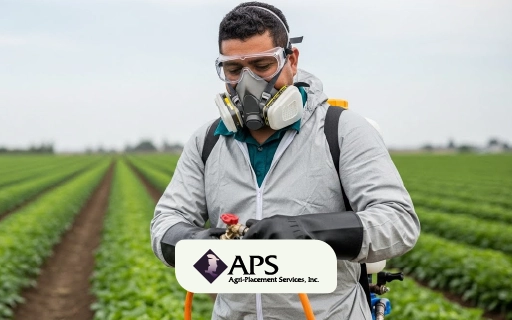
- Chemical and Pesticide Exposure: Products like pesticides or anhydrous ammonia help protect crops, but if they are handled incorrectly, they can cause serious breathing problems, burns, poisoning, or long-term health issues.
- Livestock Handling: Large animals are unpredictable. Without proper animal behavior training, workers face risks of crushing injuries or kicks.
At APS, we don’t just fill positions; we help you protect your people and your farm. Our bilingual leaders, many of whom were raised on farms or served in the U.S. Department of Agriculture, conduct on-site evaluations to help you spot these hazards before you have to face, as a farm owner, an OSHA citation or, worse, an injury.
The Essential Toolkit: Farm Safety Equipment
Investing in the right farm safety equipment is an upfront cost that prevents catastrophic back-end losses like injuries, lawsuits, and shutdowns tomorrow. According to Ohio State University Extension, personal protective equipment (PPE) is the final line of defense for the agricultural worker.
- Respiratory Protection: Essential for workers handling grain, hay, dust, or chemicals. They need proper equipment to prevent “Farmer’s Lung” and other respiratory diseases.
- Hearing Protection: Prolonged exposure to tractors and heavy machinery can lead to permanent hearing loss. Simple ear protection can prevent hearing injuries.
- ROPS (Roll-Over Protective Structures): Ensuring every tractor is equipped with ROPS and seatbelts is the most effective way to prevent overturn fatalities.
- Bilingual Signage: Safety only works when everyone understands it. For example, equipment is useless if workers don’t know when or how to use it. Clear signage in English and Spanish helps workers know the procedure and how to protect themselves while doing it.
Farm Safety Tips for Daily Operations
Beyond equipment, farm safety is about behavior and routine. Implementing a “Safety-First” culture requires consistent communication from the top down. These tips are helpful for your company’s safety:
- The “Pre-Op” Check: Never start a machine without a 360-degree walk-around. Checking shields and guards daily prevents avoidable entanglements.
- Hydration and Heat Safety: Especially in states like Texas and Florida, heat is a major hazard. Providing shaded rest areas and cool water is a legal and ethical necessity. It prevents heat stress, fainting, and medical emergencies.
- Youth Safety: Many farms are family operations. Ensuring that children are kept away from active work zones and machinery is paramount.
- Emergency Response Training: Every worker should know what to do in an emergency, as well as the location of first aid kits, fire extinguishers, and have a clear protocol for calling emergency services, regardless of language barriers.
Putting safety into daily routines not only prevents accidents; it protects your workforce, productivity, and the future of your business.
Integrating Safety into the Hiring Process
One of the biggest mistakes farm owners make is thinking safety starts in the field. It actually begins during hiring. At APS, we believe that strong recruitment practices are your first and most powerful defense against future workplace accidents.
- Screening for Experience and Attitude: A worker who respects machinery is safer than one who is merely fast. At Agri-Placement, during our selection process, we make use of Shortlist Scorecards to evaluate a candidate’s history with safety protocols. We prioritize workers who value “doing it right” instead of “doing it fast.”
- The Language Barrier as a Safety Risk: Clear communication saves lives. If a worker cannot understand a safety instruction, warning, or an equipment manual, the risk of an accident increases exponentially. That’s why Agri-Placement Services provides bilingual support and interpretation to ensure that every safety protocol is understood in the worker’s strongest language.
- Onboarding and Safety Training: Our process doesn’t end once a worker is hired. We work with farm owners to ensure that new hires receive custom on-site training. This ensures that the “right fit” is also a “safe fit” from day one.
Why Should Farm Owners Invest in Health and Safety?
Because the financial return is undeniable. A strong safety program doesn’t just protect people; it protects your business.
- Reduction in Workers’ Comp Premiums: A clean safety record leads to lower insurance costs over time.
- Avoiding OSHA Fines: Federal audits can result in penalties that reach into the tens of thousands of dollars. With APS’s “Legal Shield”, your documentation—including I-9s and safety logs—remains compliant and audit-ready.
- Maintaining Productivity: An injured worker means a stop in production, a loss of morale, and the high cost of finding a temporary replacement. That’s why safety keeps your workforce stable and your production moving.
- Employee Retention: Workers stay where they feel safe and valued. By prioritizing health, you reduce the “profitability problem” of high staff turnover.
The “Legal Shield”: Regulatory Compliance with APS
When it comes to federal regulations, “not knowing” is never a defense. Whether it is EPA Worker Protection Standards (WPS) or OSHA’s General Duty Clause, farm owners are legally required to provide a workplace free from recognized hazards. Failure to do so can result in costly fines, legal exposure, and operational shutdowns.
Through our Employee Leasing Option, APS assumes much of the administrative and legal burden for you. We handle the payroll, the taxes, and the workers’ compensation, providing you with a superior layer of protection. Our team stays updated on evolving laws so you don’t have to face the complexities of hiring and compliance alone.
With APS, you gain peace of mind knowing your workforce is not only reliable but fully protected under a system built to keep your business safe.
Conclusion: A Legacy of Safety and Prosperity
Farm health and safety is a journey, not a destination. It requires the right equipment, the right practices, and—most importantly—the right people. By combining the rigorous standards of agricultural extension programs with the specialized recruitment power of Agri-Placement Services, Inc. (APS), you can build a long-term culture of safety and productivity that protects your most valuable asset: your people.Since 1999, our promise has been to ensure a prosperous, long-lasting employer-employee relationship. Let Agri-Placement handle the recruitment and the “Legal Shield” of safety compliance, so you can focus on growing the business that feeds the nation.