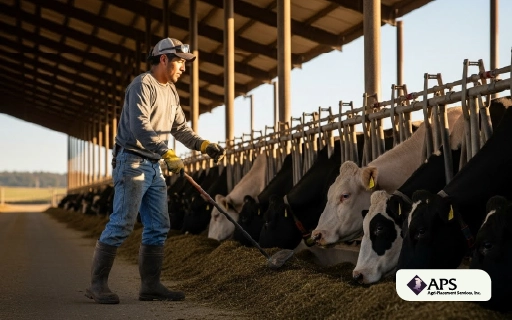

The difference between a record-breaking harvest and a costly operational shutdown in industrial and agricultural operations is the difference between “knowing” a task and “mastering” it. That’s why, for farm owners and facility managers, the challenge isn’t just finding workers, it’s ensuring they retain the critical skills needed to operate safely and efficiently. This is where learning by repetition becomes a strategic asset.
Therefore, learning by repetition is not just a training method; it is actually a strategic barrier against risk or failure. Through 25 years of field experience, we have learned at Agriplacement that mastery is built through frequency. We know that mastering the science of repetition and learning leads our operations to transform our workforce into reliable and long-lasting teams, better mitigating high turnover.
What’s Repetition in the Professional Context?
Before diving into the benefits or consequences of it, we must answer a fundamental question: what’s repetition when applied to the workplace? The answer is that it is not the mindless duplication of a task; rather, it is the deliberate practice of a specific skill or protocol until it becomes a subconscious “muscle memory.” Therefore, learning by repetition is the process of reinforcing skills or information through repeated practice until they become automatic.
In psychology, this is often linked to the “Spacing Effect,” which suggests that information is better retained when learning is spread out over time. In the case of an agricultural worker or an equipment operator, this means that safety protocols and technical maneuvers shouldn’t just be taught once during orientation. They must be reinforced consistently to move from short-term memory to long-term expertise.
The Science of Repetition and Memory
The link between repetition and memory is rooted in how the brain builds neural pathways. Repetition isn’t the theory—it’s how people actually get good at their jobs. Every time an employee repeats a task—whether it’s conducting a “Pre-Op” check on a tractor or managing a complex irrigation system—the brain builds stronger “muscle memory,” meaning the job gets faster, smoother, and safer.
- Skill Acquisition: The more a worker practices a specific maneuver, the faster they can execute it with precision and confidence. They get better and faster.
- Error Reduction: Repetition allows employees to identify and correct small mistakes before they become expensive problems.
- Cognitive Load Management: Once a task is mastered through repetition, it requires less mental effort. This allows workers to stay alert to other environmental hazards, increasing overall farm and operational safety.
Spaced Repetition Benefits for Industrial Operations
Regular repetition is good, but spaced repetition is even better. Instead of training once and hoping employees remember, this approach reinforces key skills over time so they truly stick. The spaced repetition benefits for your bottom line are significant:
- Durable Knowledge: Employees don’t just “cram” information for a single shift; they build knowledge that lasts for the entire season and beyond.
- Adaptability: When workers truly master their job through repetition, they are better equipped to handle unexpected equipment failures or changes in operational procedures without panic or guesswork.
- Consistency: Spaced repetition keeps everyone working the same way—the right way. By following the same “gold standard” protocols, it results in less waste, fewer mistakes, and a more efficient operation overall.
In short, spaced repetition doesn’t just train workers — it builds a workforce you can truly rely on.
How to Teach Through Repetition in the Field
Understanding the theory behind repetition is one thing. Putting it into practice in a busy field, packing house, or plant floor is another. That’s why at APS we recommend applying repetition in operations to ensure your workforce remains productive.
How does it work?
- Demonstrate and Replicate: A supervisor demonstrates a task, and the employee replicates it immediately. This is repeated several times under direct supervision.
- Clear, Bilingual Communication: To teach through repetition effectively, there can be no language barriers. Instructions must be understood completely. Therefore, at APS we support employers with bilingual guidance and translated procedures so nothing gets lost in translation.
- Daily Safety Briefings: These short, daily repetitions of safety protocols (like PTO safety or chemical handling) keep hazards at the forefront of the workers’ minds.
- Feedback Loops: Repetition is most effective with immediate feedback. Preventing issues before they escalate means reinforcing correct behaviors in real time.
- Standard Operating Procedures (SOPs): Repetition is only powerful when everyone is repeating the same process the same way. Clear SOPs ensure consistency, reduce errors, and create a “gold standard” your team can follow day after day.
At APS, we combine clear communication, structured repetition, and practical supervision to turn training into real performance. This is how repetition stops being “training” — and becomes productivity, safety, and reliability in motion.

How to Apply Repetition Strategically
Many companies believe they “train by repetition” simply because employees repeat tasks daily. But repetition only delivers results when it is intentional, structured, and measured. That is why successful farm and industrial operations turn repetition into a formal training system rather than leaving it to chance.
A strong repetition-based system includes:
- Defined Learning Milestones: Clear expectations at each stage allow workers to progress from basic task repetition to mastery.
- Scheduled Reinforcement: Key procedures should be revisited weekly or monthly to prevent skill decay, especially in safety-critical operations. It also reinforces the safety culture in the company.
- Performance Tracking: Measuring speed, accuracy, error reduction, and safety compliance demonstrates whether repetition is truly improving performance.
- Supervisor Accountability: Leaders must reinforce repetition, not just assign tasks, so training stays consistent across the workforce and ensures workers are truly learning their tasks and increasing their skills.
Overcoming the “Revolving Door”: Retention Through Mastery
High turnover is one of the greatest threats to any operation. When workers feel incompetent or overwhelmed by their tasks, they are more likely to quit. But when, as an employer, you invest in repetition-based training, something powerful happens: employees gain confidence, competence, and pride in their work, feeling a sense of mastery and value.
By partnering with APS, you move away from the “revolving door” model. We help you recruit employees from our extensive networks who have the right attitude for long-term placement. When these workers are then trained using repetition-based methods, their stability increases. They aren’t just laborers; they become skilled assets who understand your specific company expectations so growth can keep going.
The ROI of Mastery: Productivity and Safety
The financial return on investment for training based on learning by repetition is measurable in productivity, safety, and stability.
- Increased Productivity: Mastery leads to speed and efficiency. A worker who has repeated a sorting process 1,000 times is significantly faster and makes fewer mistakes than one who has done it 10 times.
- Reduced Accidents: Mastery of safety equipment and procedures through repetition and routine directly reduces the risk of life-altering injuries, protecting both your people and your business.
- Lower Training Costs: While it takes time upfront, training through repetition reduces the need for constant retraining or the costs associated with replacing an injured or frustrated worker leaving the work environment with uncertainty.
In short, mastery through repetition—and having a great ally like APS—delivers what every farm and industrial operation needs: safer crews, stronger performance, and a workforce you can truly rely on.
Conclusion: Building a Reliable Workforce
Learning by repetition is not just a training method; it is a philosophy of excellence. It transforms a group of individuals into a cohesive, highly skilled crew that can meet the demands of modern agriculture.
At Agri-Placement Services, Inc. (APS), our promise is to do whatever we reasonably can to ensure a prosperous, long-term employer-employee relationship. By integrating the science of repetition and memory into your operation, you aren’t just training workers—you are building a legacy of safety, efficiency, and growth. Our bilingual leadership team stands ready to implement these high-impact training standards, ensuring your specific operational protocols are mastered by every member of your crew.
Don’t face training challenges alone. Leave the hiring and the training support to APS for a workforce you can truly rely on.